


A new report, produced in conjunction with Cheshire West and Chester Council, has provided some key insights on which pupils are most at risk of exclusion from school and presents recommendations on how to address these challenges.
The report published by Social Finance, a not for profit organisation that creates better solutions to social problems, uses in-depth data analysis to combine insights across education, social care, deprivation and special educational needs. This analysis identifies pupils most at risk of exclusion locally, with a view to improving local systems and support to respond to their needs earlier and more effectively.
Exclusions in west Cheshire are lower than the national average but the Council’s education team noted, that in line with the national trend, there was an increase in the number of exclusions in the 2017/18 academic year.
To address the issue the Council has worked with a range of multi-agency partners including schools to gather the data for Social Finance to analyse.
The findings show that over half (58 per cent) of multiple fixed-term exclusions were experienced by less than a fifth (15 per cent) of children. These children all have experiences of social care and/or have social emotional mental health (SEMH) needs.
The report shows that pupils who are vulnerable due to their home circumstance, learning needs and/or SEMH needs are at greater risk of being excluded from mainstream education.
An increase in absence from school by a pupil often acts as a pre-cursor to exclusion and does not reduce when they return to education after a period of exclusion. This is a key trend that schools can use to recognise deteriorating circumstances for a pupil and it also shows that on average exclusions do not work to improve engagement with school.
The report also revealed a possible gender bias in exclusions nationally, as girls are at a disproportionate risk of being excluded from school by other means, such as school moves and early exit, compared to boys who are more likely to experience ‘formal’ exclusions (permanent and fixed term)[1]. While the disproportionate risk of exclusion to boys is widely reported[2], risk of exclusion by other means is not widely reported on. The report supports the Government’s findings of the higher risk of formal exclusion to boys, but points to a possible ‘invisible’ trend of some groups of pupils, such as girls, getting informally excluded, meaning their exclusions lack the accountability built into formal exclusions. Girls were also found to be equally as likely as boys to be persistently absent (absent over 10 per cent - more than double the average).
Councillor Bob Cernik, Cabinet Member for Children and Families said: “We understand how damaging exclusion can be for children and young people, their families and carers, and how this can have a long-term impact for everyone involved. Although our exclusion rates are below the national average, we wanted to challenge ourselves to address this issue and use an evidence-led approach to guide us.
“In west Cheshire we have strong partnership working between the local authority, schools and other partners. All key stakeholders shared the collective vision and dedication to address this issue and although we had a good understanding of school exclusions, the detailed data analysis provided in this report provides us with the starting point to make further improvements. The findings will be instrumental in re-modelling pathways, systems and support around school exclusions in west Cheshire as we work together to ensure that children and young people get the support they need to achieve their best.
“It’s highly likely that this will be an issue for other local authorities across the UK, and we hope that by sharing our findings we will help other councils target support better to children most at risk of being excluded.”
[1] When a pupil leaves school before finishing year 11 and does not finish school elsewhere
[2] The Government’s Timpson Review noted “this is a trend that has persisted for many years.”
The full report can be found on Social Finance's website - https://www.socialfinance.org.uk/resources/publications/whos-risk-exclusion-analysis-cheshire-west-and-chester
 Children and families in Cheshire to benefit from new Child Focused Courts approach
 Stoptober encourages residents to quit smoking as 100-day countdown to a smoke-free generation begins
 Residents invited to help shape the future of Whitby Park
 WREXHAM COMMUNITY THEATRE COMPANY RETURNS WITH BRAND NEW SHOW IN TIME FOR HALLOWEEN
 Blues Match Report: Lower Breck 1 - 2 Chester
 Appeal for information following serious collision in Chester
 Parents warn of “catastrophic tragedy” as school transport cuts leave 11-year-olds stranded on the A41
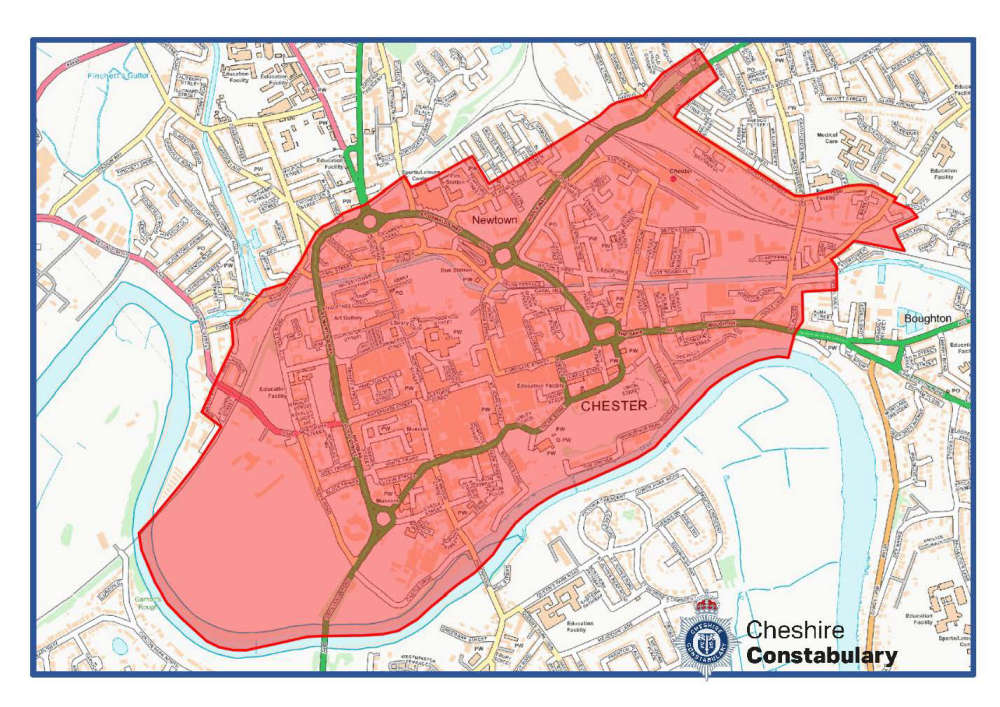 Live Facial Recognition technology to be deployed in Chester this weekend
 Road to reopen as part of town centre
 £1 bus travel launched for young people across Cheshire West and Chester
 Peak Cluster carbon capture and pipeline project in Cheshire West and Chester
 Officers out in force in Blacon for Operation Decisive
 Neighbourhood Plan and Neighbourhood Development Order finalised for Blacon
 Free Park and Ride service available for Mold Food and Drink Festival visitors
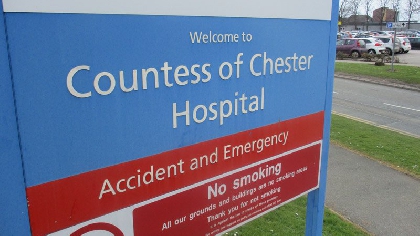 Countess of Chester Hospital NHS Foundation Trust’s response to the Thirlwall Inquiry
 Cheshire Police statement following the publication of the Thirlwall Inquiry report