


This year has thrown an additional challenge to gardeners and the Council’s maintenance teams and contractors as the grass is growing faster than usual and hedges and other vegetation are growing at the same rate.
Spring is the best time to prune some trees and hedges, before the start of the bird nesting season. Outside of the borough’s woodland areas, the Council is responsible for around 50,000 trees and 45 miles of hedges. Hedge cutting starts from the beginning of September and continues to the end of October.
No hedge cutting takes place between 1 March and 31 August, except where it is necessary to ensure public safety. Birds are actively nesting at this time and it is an offence under Section 1 of the Wildlife and Countryside Act (1981), to intentionally damage or destroy the nest of any wild bird while it is being used or built.
The Council’s Deputy Leader and Cabinet Member for Environment, Highways and Strategic Transport, Councillor Karen Shore said: “The recent warm and humid spells followed by heavy rain have created a surge in grass, tree and hedge growth across Cheshire West. Our Streetcare Teams will be working very hard to maintain our beautiful borough in the coming weeks.
“Many trees in public spaces are maintained by the Council, this includes trees in public parks and open spaces and those within highway verges. However, residents, landowners and farmers are responsible for trees and hedges on private land.
“Our Tree officers recommend that cutting hedges and trees is avoided between March and August as that is the main breeding season for nesting birds.
“Not all cutting is undertaken by the Council. Most hedge cutting along the highway is done by the adjacent landowner (often farmers). For more information about trees, woods and hedges on private land, please visit the trees, woods and hedges page on the Council’s website.”
The Council’s website has a wide range of advice and guidance if you have a problem with trees that are not on council-owned land.
You must not do any work which might harm nesting birds or destroy their nests. You’ll usually find nesting birds during the main nesting and breeding season from 1 March to 31 August.
Added Councillor Shore: “We’ve seen an increase in comments on social media about overgrown trees and hedges from private properties blocking pavements on routes to schools.
“We encourage as many people as possible to walk or cycle where possible to help us tackle the climate emergency and reduce our reliance on cars. We are asking residents to think about people who may pass by their property – please cut back any overhanging branches or foliage after carefully checking this won’t disturb any nesting birds. Thank you.”
 Chester and Wirral Football League - Weekend Round Up
 Back to the Future event to be held at Picturehouse Cinema
 Children and families in Cheshire to benefit from new Child Focused Courts approach
 Residents invited to help shape the future of Whitby Park
 WREXHAM COMMUNITY THEATRE COMPANY RETURNS WITH BRAND NEW SHOW IN TIME FOR HALLOWEEN
 Blues Match Report: Lower Breck 1 - 2 Chester
 Appeal for information following serious collision in Chester
 Parents warn of “catastrophic tragedy” as school transport cuts leave 11-year-olds stranded on the A41
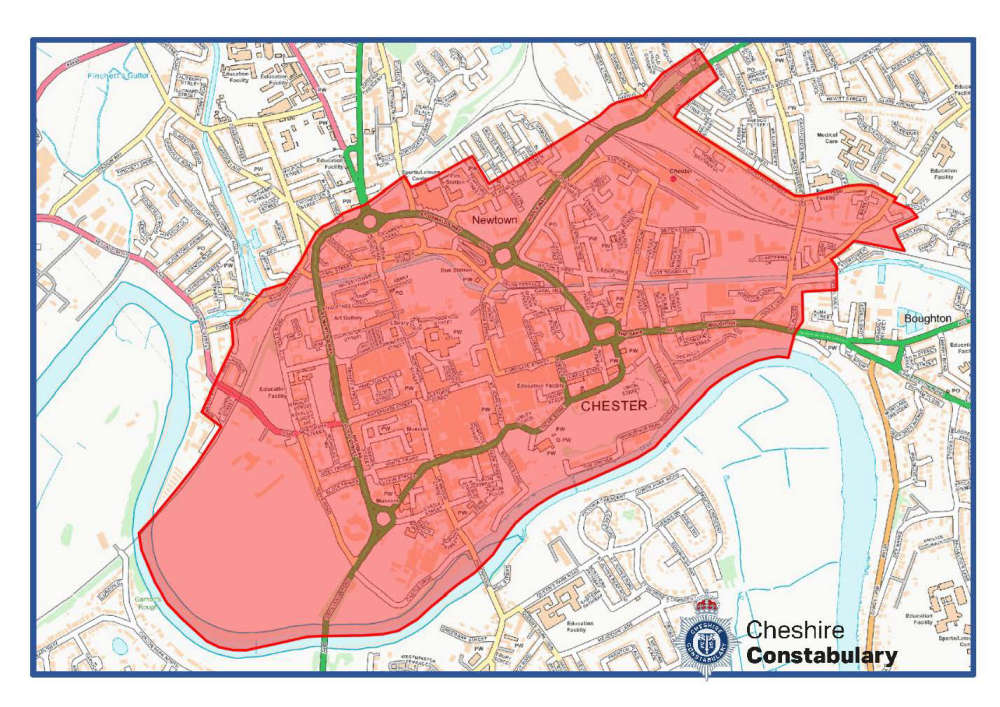 Live Facial Recognition technology to be deployed in Chester this weekend
 Road to reopen as part of town centre
 £1 bus travel launched for young people across Cheshire West and Chester
 Peak Cluster carbon capture and pipeline project in Cheshire West and Chester
 Officers out in force in Blacon for Operation Decisive
 Free Park and Ride service available for Mold Food and Drink Festival visitors
Comments
Add a comment