

Surinam toads - a species that carries its developing young beneath the skin of the female’s back - have bred at Chester Zoo for the first time.
The aquatic toads, which are native to South America and rarely seen in UK zoos, are famous for their distinctive reproductive process.
Four new Surinam toads (Pipa parva), the first to live at Chester Zoo, have been named Ripley, Lambert, Ash and Dallas after characters in the iconic Alien films.
Keepers say the names are a nod to the species’ unusual breeding strategy, which looks surprisingly like scenes from the sci-fi horror series. The toads are now living in a new specially created habitat in the zoo’s Tropical Realm, one of its biggest indoor areas.
Unlike most frogs, which lay spawn in water and leave it to develop, Surinam toads use a very different method. When the eggs are laid, the pair perform a backflip which flicks them onto the female’s back. The male then presses the eggs into her skin.
Adam Bland, Assistant Team Manager for Amphibians at Chester Zoo, said the successful breeding offered a great chance to call attention to the fascinating world of amphibians.
He said:
“After implantation, the skin grows around these little white blobs in just a few hours. It’s a really quick process. The tadpoles form under her skin until they’re ready, and then they burst free and swim out from holes in her back.
“It’s incredible to watch how this unique strategy has evolved in these toads.”
The keepers hope this part of the life cycle will capture the imaginations of visitors.
Images of egg-carrying Pipa parva, and their cousins, Pipa pipa, often trigger curiosity online. They have been linked to trypophobia, with some viewers reacting with strong disgust or anxiety to seeing the clusters of eggs and holes in their skin.
However, much of the time, the toads should be fine to view at Chester Zoo, as the eggs are only visible for a short period.
Surinam toads spend their entire lives underwater and have flattened bodies that help them blend into leaf litter on riverbeds. They have also evolved star-shaped sensory structures on their fingers, which they use to detect movement and locate prey in muddy water.
Despite investing heavily in raising their young until hatching, the adults can pose a risk once the tadpoles emerge.
Mr Bland said:
“They’re extremely greedy and will eat almost anything that moves. We remove the tadpoles quickly to give them the best possible chance of survival.”
The species also communicates differently from most frogs. Rather than croaking, Surinam toads produce a soft clicking sound by moving small bones inside their bodies.
Mr Bland said working with unusual species such as the Surinam toad helps improve understanding of amphibian biology at a time when many species are declining worldwide.
He added:
“They aren’t animals people expect to see. But that’s exactly why they’re so effective for helping people understand how amphibians live - and why we’re trying to prevent their extinction.”
Surinam toad facts:
Scientific name: Pipa Parva
Type: An aquatic amphibian from the family Pipidae
Habitat: Lives in slow-moving rivers, ponds, and flooded forests of northern South America
Appearance: Has a flat, leaf-shaped body with brown or grey colouring and star-shaped sensory fingertips
Diet: Feeds on insects, worms, crustaceans, and small fish
Reproduction: Eggs are embedded in the female’s back where they develop and emerge as tadpoles
Behaviour: Mostly nocturnal and relies on camouflage to ambush prey
Lifespan: Typically lives around 8–10 years
Call: A click which sounds like someone tapping a spoon against the rim of a teacup
Pictured - Visitors to Chester Zoo can now see Surinam toads for the first time.
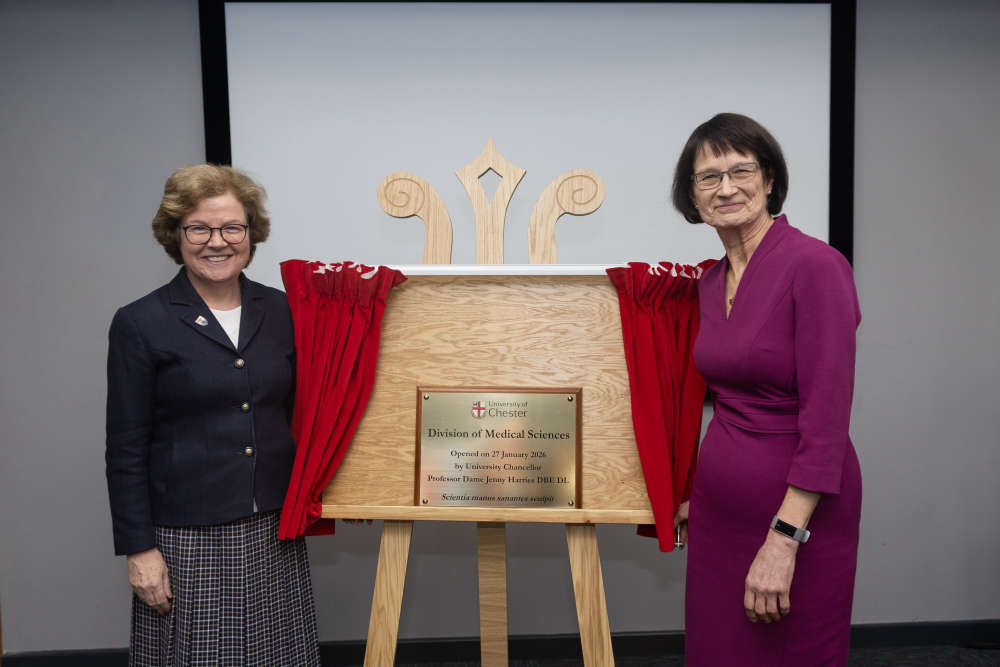 Home of Medical Sciences officially opened by University of Chester Chancellor
 Two men jailed for their roles in County Lines drug dealing in Chester
 HISTORIC CHESTER CHURCH SET TO CELEBRATE ST WERBURGH'S FEAST DAY AND 150th ANNIVERSARY
 Man jailed for more than six years following successful police stop check in Chester
 Northgate Arena refurbishment on track for Spring 2026 as site reaches one-year milestone
 Prolific shoplifter banned from Ellesmere Port shops under Criminal Behaviour Order
 Blues Match Report: Marine 2 - 1 Chester
 Chester and Wirral Football League - Weekend Round Up
 Blues Match Preview: Marine v Chester FC
 BAFTA Winner Brings Laughs to Charity Lunch at Carden Park
 Construction works for the new Cheshire Archive Centre
 Local MP launches petition as ‘temporary’ NHS walk-in centre closure drags on
 ACCLAIMED COMPOSER SET TO HOLD SINGING MASTERCLASS IN CHESTER
 Blues Match Report: Peterborough Sports 3 - 0 Chester FC
 Appeal for witnesses following assault in Chester
 Blues Match Preview: Peterborough Sports v Chester FC
Comments
Add a comment