


With the school holidays well under way, scores of young children across the UK are benefitting from the Government’s Holiday Activities and Food (HAF) scheme.
But while much has been achieved via this national campaign, spotlighted by England footballer Marcus Rashford MBE, there is still more work to be done on closing the poverty gap, in particular for high school children and pupils with Special Education Needs and Disabilities in Cheshire.
Those are the thoughts of experts from the University of Chester who have explored the impact of HAF provision across Cheshire West and Chester, Halton and Wirral over the past two years.
In the weeks since the Government published its Food Strategy report, economic and nutrition experts from the University have welcomed this plan as a significant step in the right direction. The new guidance places a focus on extending eligibility for free school meals, funding for the HAF programme for the next three years, expanding the Healthy Start Scheme, and trialling a Community Eatwell scheme.
Dr Rosa Fernandez, Leader of the University’s Food Security, Sustainability and Social Justice Research Group, and Programme Leader in Economics, is one of the academics from the University to have completed impact assessments of HAF schemes in the local region.
Dr Fernandez and colleagues looked into activities and food provision under the care of Edsential prior to and during the onset of the COVID-19 pandemic. This local scheme was aimed at children, teenagers and their families, to be provided with food and activities over the summer break, with the purpose to at least cover the need of those children entitled to free school meals.
Their latest report found that the provision of activities and food during the school summer break was a positive intervention in communities suffering from low income and high levels of poverty and deprivation. But it also showed that COVID-19 restrictions and negative economic impacts exacerbated the inequalities existing in those communities, exposing significant gaps in access to services, education and digital facilities.
And while Dr Fernandez says she is pleased that some of these issues are now being addressed in the Government’s Food Strategy, she is concerned that more funding needs to be put into place to continue independent evaluator research, and to help others in the local community.
She said: “It’s really pleasing to see that the Government intends to fund HAF schemes for the next three years because, as we saw in our first studies, when funding was last minute, it resulted in piecemeal provision, making it harder for the local communities to access what they needed. With more guaranteed funding for a longer period, local organisations can plan activates better and expand their offer.
“It is also really important that the focus is being expanded to secondary school children. In our area, most of the provision was for primary school children, but as we all know the poverty gap doesn’t close at primary age. It’s vital that we have activities that will also engage teenagers and cater for their needs, particularly if we want to address and prevent issues such as the County Lines drug trade.”
She added: “However, while the Food Strategy goes some way to addressing these concerns, our research also revealed how the pandemic has made the digital gap for families with lower income more visible.
“For example, there were many families who had no digital devices such as phones or laptops, or access to internet, therefore excluding them from finding out about the many services and schemes on offer to help them. This is a vital area which really needs further research and funding.
“We also saw that some local areas had double the proportion of young people classified as SEND (Special Educational Needs and Disabilities) who were also unable to access certain provision.”
For Dr Fernandez, one of the most important messages to be taken away from both the studies and the Food Strategy report is the importance of taking the stigma away from such provisions.
She said: “We now have a real opportunity to help families in a positive way. By providing an integrated approach that involves schools, organisations, charities and the local community we can deliver creative and successful HAF programmes that can support families including children of all ages, as well as their parents or carers, across all of their needs.
“By increasing financial support for programmes and taking away these digital barriers we don’t have to wait for situations to reach acute crisis point when interventions are required and where people feel embarrassed about asking for help. We can help them access support from the outset and help to balance the inequalities.”
Pictured - Dr Rosa Fernandez, Leader of the University’s Food Security, Sustainability and Social Justice Research Group, and Programme Leader in Economics.
 Continued parking chaos at Wrexham Maelor Hospital
 Residents invited to have their say on draft Transformation Strategy
 Family of "beautiful" son who died following Chester collision pay tribute
 Chester and Wirral Football League - Weekend Round Up
 Back to the Future event to be held at Picturehouse Cinema
 Children and families in Cheshire to benefit from new Child Focused Courts approach
 Residents invited to help shape the future of Whitby Park
 WREXHAM COMMUNITY THEATRE COMPANY RETURNS WITH BRAND NEW SHOW IN TIME FOR HALLOWEEN
 Blues Match Report: Lower Breck 1 - 2 Chester
 Appeal for information following serious collision in Chester
 Parents warn of “catastrophic tragedy” as school transport cuts leave 11-year-olds stranded on the A41
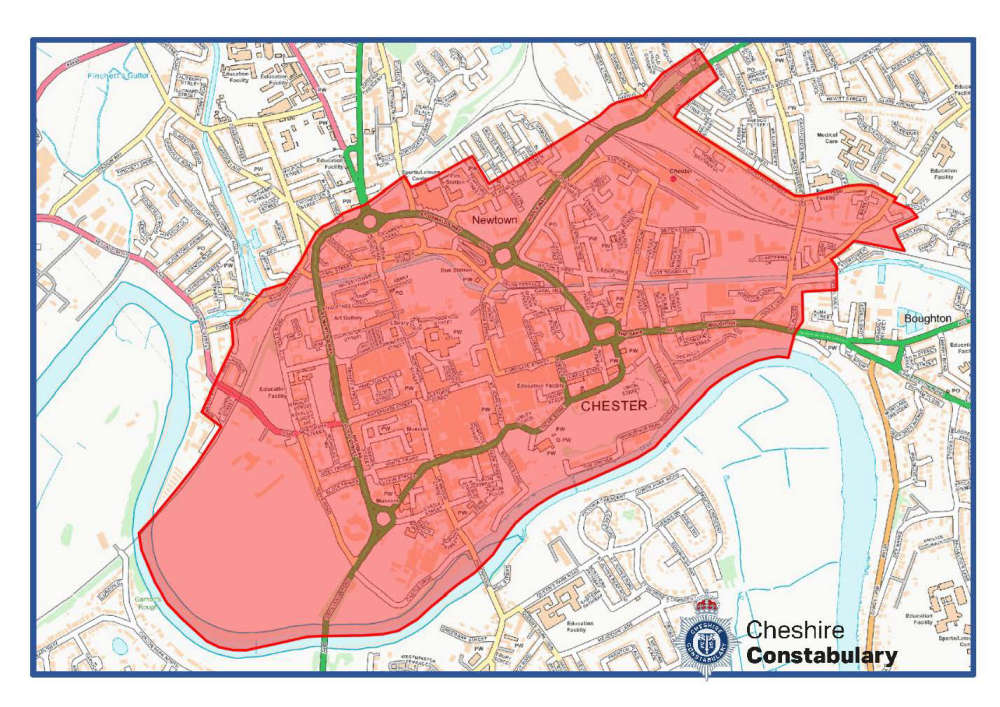 Live Facial Recognition technology to be deployed in Chester this weekend
 Road to reopen as part of town centre
 £1 bus travel launched for young people across Cheshire West and Chester
 Peak Cluster carbon capture and pipeline project in Cheshire West and Chester
 Officers out in force in Blacon for Operation Decisive
 Neighbourhood Plan and Neighbourhood Development Order finalised for Blacon
Comments
Add a comment