
A medical lecturer from the University of Chester is playing his part in allaying fears over the risk of rare blood clots, potentially linked to one of the COVID-19 vaccinations.
In light of recent concerns over the AstraZeneca/Oxford vaccination, Dr Gareth Nye, from Chester Medical School, has addressed exactly what blood clotting is, why is it is actually important for our bodies, and explains the scenarios when it can also pose a risk.
A lecturer in anatomy and physiology, with an interest in maternal and foetal health, Dr Nye has spoken up to reassure those currently awaiting their vaccines.
Dr Nye, who is also an ambassador for the Society of Endocrinology – an organisation which support scientists, clinicians and nurses working with hormones – explained: “There have been a lot of alarming headlines in recent days linking blood clots to the vaccine, but it is very important to put this into context.
“Clotting or coagulation is a completely normal part of our body’s functioning. In fact, it’s quite essential. It is basically the process which stops us bleeding and there are several pathways involved in turning parts of our blood into a sticky clot to plug the gap.
“Whenever we damage a blood vessel in our body, be it via a cut in the skin or through conditions like artery disease, it releases chemicals which make the affected area sticky to the cells in our blood called platelets.
“Through the process of coagulation cascade, we end up with a large group of platelets and a protein called fibrin, which combine to block the hole in the blood vessel – this is what we call a scab.
“Clots are important because without them we would be unable to stop bleeding, which can be seen in people with the condition haemophilia. In the most serious cases, even slight bumps can be dangerous for haemophiliacs.”
Dr Nye explains that across the European Union and the United Kingdom there have been 37 clotting issues reported among those vaccinated to date – 15 cases of deep-vein thrombosis and 22 cases of pulmonary embolism, a blood clot that has entered the lungs, while the total of vaccinations issued so far is around the 17 million mark.
He adds: “The rate of these reported clotting issues is about what you would expect to see globally and so there is no suggestion it’s due to the vaccine and this is particularly true in the older generation of people who have been vaccinated first.
“In fact, women who are on hormone replacement therapy have a higher risk of blood clots – up to 35 cases per 10,000 - as do women on oral contraceptives with one case per 100 for every 10 years taking them. Pregnancy generally has a rate of one case every 500 pregnancies, or the equivalent of one to two a day worldwide. Thankfully however, the risk of these clots being serious is extremely small – as with the vaccine.”
Dr Nye added: “People should not allow these reports to put them off having the vaccination – the sooner the population gets vaccinated, the less chance we all have of getting a serious illness from COVID-19. This puts less pressure on our NHS and we can hopefully go back to some form of normality.”
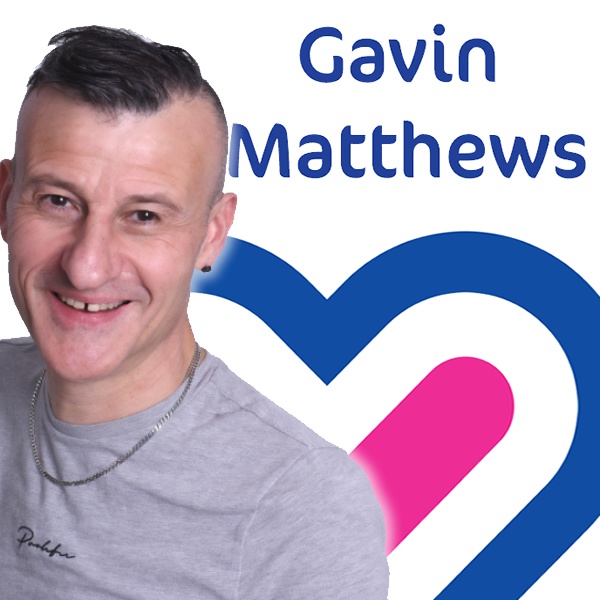
Pictured - Dr Gareth Nye from Chester Medical School.
 Children and families in Cheshire to benefit from new Child Focused Courts approach
 Stoptober encourages residents to quit smoking as 100-day countdown to a smoke-free generation begins
 Residents invited to help shape the future of Whitby Park
 WREXHAM COMMUNITY THEATRE COMPANY RETURNS WITH BRAND NEW SHOW IN TIME FOR HALLOWEEN
 Blues Match Report: Lower Breck 1 - 2 Chester
 Appeal for information following serious collision in Chester
 Parents warn of “catastrophic tragedy” as school transport cuts leave 11-year-olds stranded on the A41
 Live Facial Recognition technology to be deployed in Chester this weekend
 Road to reopen as part of town centre
 £1 bus travel launched for young people across Cheshire West and Chester
 Peak Cluster carbon capture and pipeline project in Cheshire West and Chester
 Officers out in force in Blacon for Operation Decisive
 Neighbourhood Plan and Neighbourhood Development Order finalised for Blacon
 Free Park and Ride service available for Mold Food and Drink Festival visitors
 Countess of Chester Hospital NHS Foundation Trust’s response to the Thirlwall Inquiry
 Cheshire Police statement following the publication of the Thirlwall Inquiry report
Comments
Add a comment