
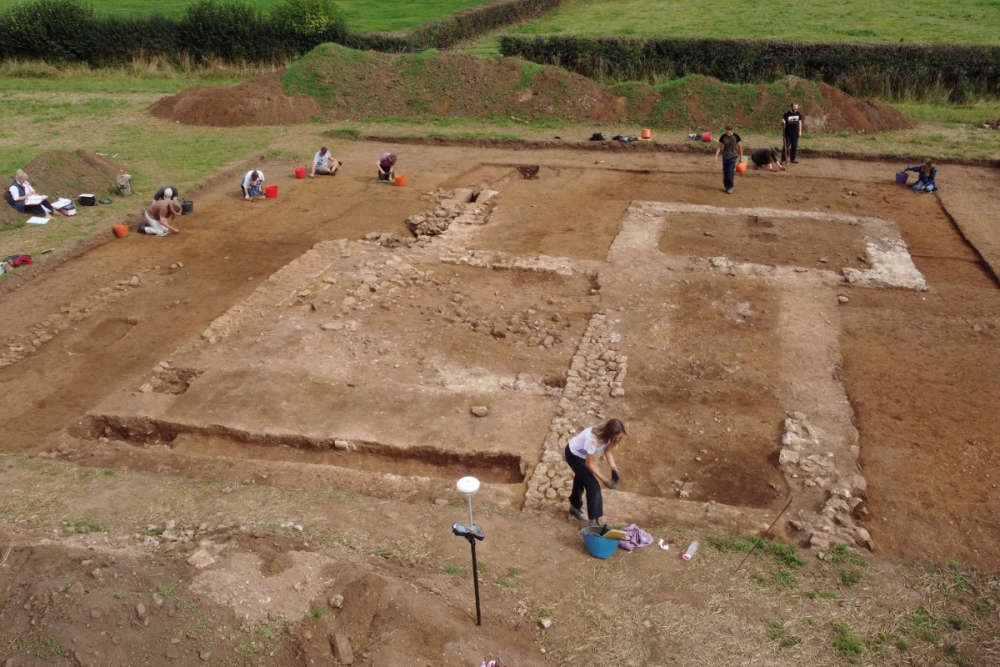
A new dig at the site of the first confirmed Roman villa discovered in North Wales will aim to answer key questions about the area’s ancient past.
The University of Chester has teamed up with DigVentures for the archaeological dig in Rossett, near Wrexham, following a successful crowdfunding campaign.
The excavation follows investigations into the area by the University and Archaeological Survey West, sparked by the discovery of a lead ingot by a metal detectorist near Wrexham in 2019. Further archaeological exploration of the wider area revealed Roman flooring, ceramics and other Roman artefacts that hinted a high-status Roman building could be nearby.
The site has since been confirmed as a villa complex, and its discovery is helping to reshape archaeologists’ understanding of Roman rural life in the region, raising the possibility that Roman wealth, villas and settlement extended further into Wales than previously thought.
This September, archaeologists from DigVentures and the University will investigate new areas of the villa complex, exploring how it developed, how its inhabitants lived and worked, and how the site changed over time. The dig is being carried out in collaboration with Wrexham Museum, the Portable Antiquities Scheme, PAS Cymru and In Search of Roman Rural Settlement with Heneb.
So far, excavations have uncovered pottery, coins, animal bones and building materials, with evidence of heating systems, decorated interiors and fine plasterwork. Finds from this site also suggest that the villa was connected to wider Roman trade networks, with imported pottery, high-quality building materials and sophisticated heating systems indicating that its residents were well-connected and wealthy.
Despite these discoveries, much of the villa remains unexcavated, leaving key questions about the site unanswered. Through this project, the team hopes to uncover more about the villa’s full layout, how its rooms were used, when it was built and how long it was occupied. The investigation could even provide more information about who lived there, how they may have been connected to wider trade networks, and what this site could reveal about life, work and the economy in Roman Wales.
Free public tours of the site are being held on Saturday, September 5th and Wednesday, September 9th.
Places can be booked via Eventbrite at:
Dr Caroline Pudney, Senior Lecturer in Archaeology at the University of Chester and co-site director, said:
“It is fantastic to be back at Rossett, continuing the exploration of North Wales’ first confirmed Roman villa. Every season brings fresh discoveries, helping us build a clearer picture of the people who once lived here and their place in Roman Britain. Working alongside DigVentures and welcoming the public to be part of the journey allows us to deepen our understanding of the site while inspiring more people to connect with their local history and heritage.”
Harriet Tatton, Programme Officer for Project Development at DigVentures, said of this year’s dig:
“It’s incredibly exciting to be part of this moment in North Wales’ history, as we help to rewrite what we know about Roman settlement in this region through some genuinely significant archaeology!”
For more information about the excavation or to become a crowdfunder and join DigVentures in delving deeper into this site’s ancient story, visit the DigVentures website at:
https://digventures.com/projects/rossett-villa/crowdfund.
Pictured - Previous excavation work by the University of Chester.
DigVentures is a platform that enables civic participation in archaeology and heritage projects for anyone, regardless of experience. It has pioneered the use of crowdfunding, crowdsourcing and digital methods to increase access and opportunities for real people to purposefully participate in real, community-led research. DV is a Chartered Institute for Archaeologists Registered Organisation, and the first-ever CIfA Accredited Fieldschool.
 Nantwich Food Festival 2026 is almost here!
 STORYHOUSE ENTERS BIFA’S CINEMA OF THE YEAR AWARD
 Man jailed following drugs warrant in Chester
 Flintshire’s Youth Services praised by Estyn for supporting young people’s wellbeing and development
 POPULAR CHESTER VIOLINIST CELEBRATES ORCHESTRA'S TWO YEAR ANNIVERSARY
 Less than one month to go to the Nantwich Food Festival 2026
 Blues Match Report: Chester FC 1 - 0 Spalding United
 Residents encouraged to check they’re receiving all the financial support they are entitled to
 Blues Match Preview: Chester FC v Spalding United
 Chester FC - Update from the General Manager
 Countess of Chester Hospital delivers major reduction in waiting times for planned treatment
 Blues Match Report: Darlington 0 - 1 Chester
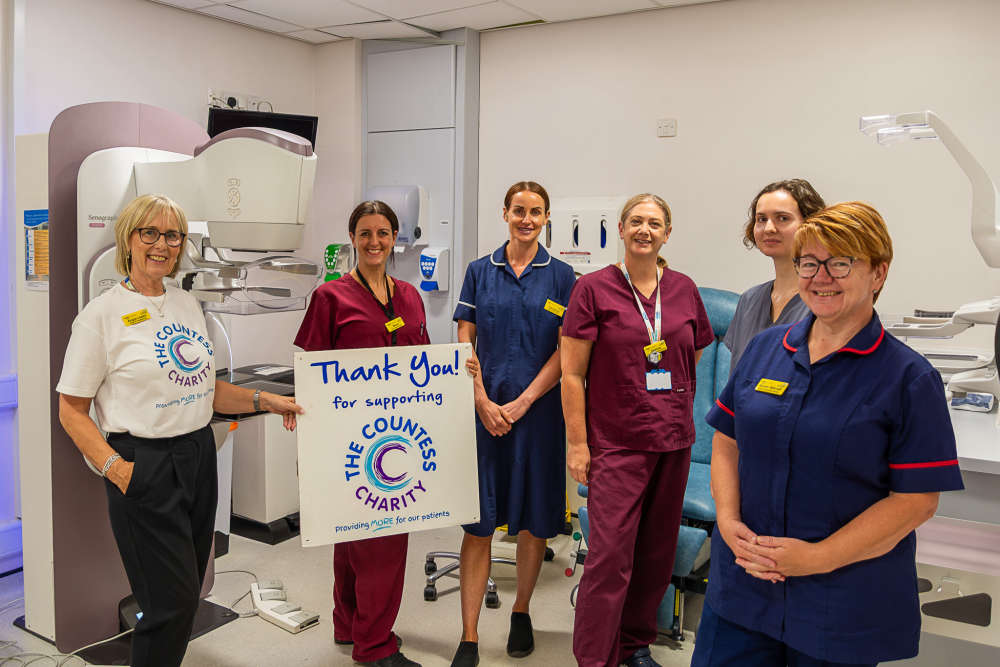 Community support helps Countess Charity go the Extra Mile for patients
 Free park and ride service for Lloyds Tour of Britain Women start in Mold
Comments
Add a comment